
Advent - 25 Days of Christmas Traditions

Day 1: Advent – Beginning Our 25 Days of Christmas Traditions
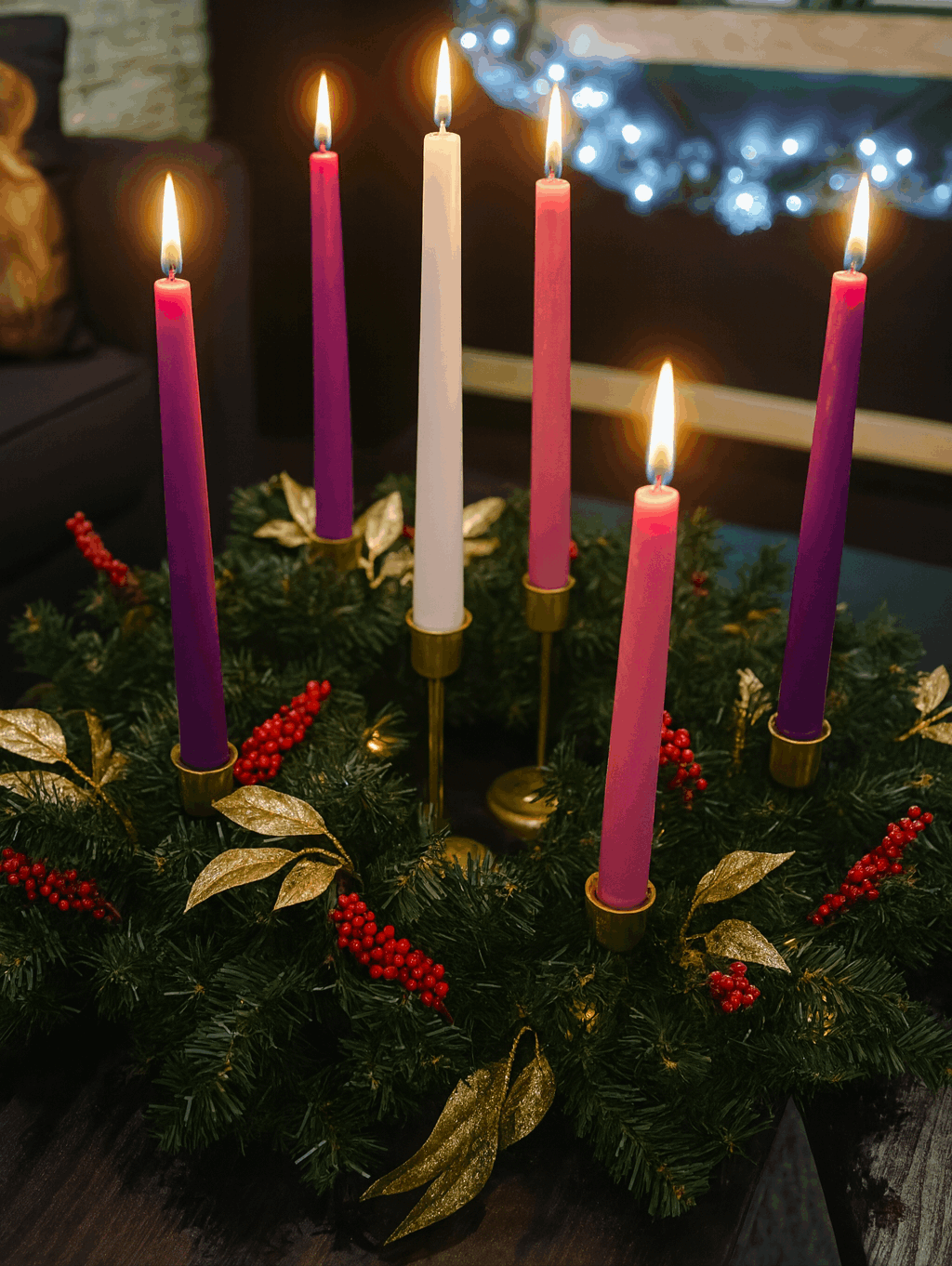
The holiday season is a tapestry of traditions—some passed down through generations, others created anew in modern homes. From decorating Christmas trees to hanging lights, from baking seasonal treats to embracing the iconic colors of red and green, every custom has a story. Across cultures and throughout history, these traditions evolve, adapt, and enrich the celebrations that bring people together every December.
But have you ever wondered why we do these things? What meaning hides behind our favorite traditions, or how they came to be part of our seasonal celebrations? Whether it’s the Christmas tree, the twinkling lights, or even the songs we sing, each one has an origin that reveals something about the cultures that shaped them and the families who continue them today.
Day 1 of our 25 Days of Christmas Traditions. Each day, we uncover the history and significance behind a beloved holiday practice. And there is no better place to begin this journey than with the tradition that marks the official start of the Christmas season: Advent.
What Is Advent?
The word Advent comes from the Latin adventus, meaning “arrival” or “coming.” Traditionally, Advent refers to the four weeks leading up to Christmas—a season of reflection, preparation, and anticipation. For many Christian denominations, it marks the beginning of the liturgical year and serves as a time to focus on both the coming celebration of Christ’s birth and the anticipation of His return.
Celebrated around the world, Advent rituals vary in style and tone. Some focus on quiet spiritual reflection, while others embrace festive anticipation. Regardless of tradition, the season encourages slowing down and preparing our hearts and homes for Christmas.
The Advent Wreath: A Symbol of Light and Expectation
The Advent wreath is one of the most recognizable symbols of the season. Rooted in European tradition and widely used in both homes and churches, the wreath combines evergreen branches—symbolizing everlasting life—with candles that represent the increasing light of Christ entering the world.
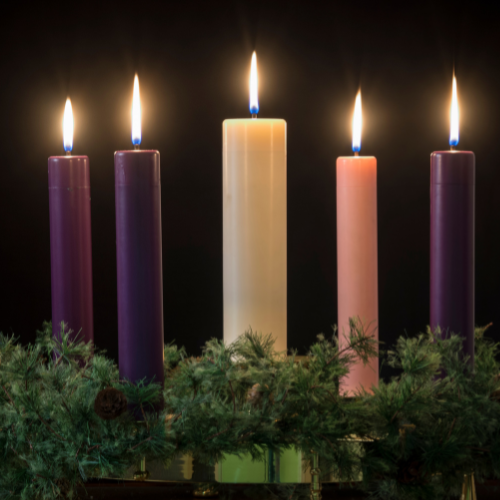
The Five Advent Candles and Their Meanings
While some traditions use four candles, many families and churches incorporate a fifth candle—the Christ Candle—to complete the wreath. Each candle carries a distinct meaning, representing a theme for each week of Advent.
1. First Candle – The Prophet’s Candle (Hope)
Color: Purple
This candle symbolizes hope, particularly the hope foretold by Old Testament prophets who anticipated the coming Messiah.
2. Second Candle – The Bethlehem Candle (Peace)
Color: Purple
This candle reflects the peace associated with the humble birthplace of Jesus and the quiet expectation leading up to His arrival.
3. Third Candle – The Shepherd’s Candle (Joy)
Color: Pink (Rose)
Also known as the Gaudete candle, this marks a joyful shift in the Advent journey. It represents the joy of the shepherds who heard the angels proclaim Christ’s birth.
4. Fourth Candle – The Angel’s Candle (Love)
Color: Purple
This candle represents love—specifically the love proclaimed by the angels who announced Christ’s birth with the message of “peace on earth, goodwill to all.”
5. The Christ Candle
Color: White
Lit on Christmas Eve or Christmas Day, the Christ Candle symbolizes purity, light, and the arrival of Jesus. Positioned at the center of the wreath, it represents the heart of the Christmas message.
Why Purple and Pink?
The colors used in the Advent wreath come from ancient liturgical traditions. Purple symbolizes penitence, preparation, and royalty. Pink appears on the third Sunday to signify a lifting of the somber tone—a moment of joy as Christmas draws near.
The Advent Calendar: A Countdown Tradition Loved Around the World

Originally popularized in 19th-century Germany, the Advent calendar has become a staple in homes worldwide. Early versions involved marking doors with chalk or lighting candles. Later, printed calendars emerged with small windows to open each day of December leading up to Christmas.
Today’s Advent calendars come in countless forms, including:
- Scripture or devotion-based calendars
- Chocolate or candy calendars
- Toy-filled calendars for children
- Luxury beauty or lifestyle calendars
- Random-act-of-kindness calendars
- Digital and interactive countdowns
While styles vary, the heart of the tradition remains the same: a daily moment of joyful anticipation.
How to Celebrate Advent Today
Light the Advent Wreath Weekly
Many families light their candles on Sunday evenings, reading scripture or sharing reflections connected to each theme.
Use an Advent Calendar
A fun and engaging way to count down the days, Advent calendars help create daily moments of connection.
Focus on Reflection and Intention
Advent invites slowing down. Many families incorporate gratitude, giving, or acts of kindness into their traditions.
Create Child-Friendly Traditions
Storybooks, crafts, and hands-on activities help children understand the themes of hope, peace, joy, and love.
Historical Origins of Advent
The exact beginnings of Advent are not fully documented, but historians generally trace its development to the 4th–6th centuries. Early observances resembled a period of fasting and preparation similar to Lent. Over time, the season became closely associated with the anticipation of Christ’s birth.
The Advent wreath appeared much later, originating in the 19th century when German pastor Johann Hinrich Wichern used a wheel with candles to help children count the days to Christmas. This practice quickly spread through churches and homes across Europe and eventually worldwide.
The Advent calendar likewise took form in 19th-century Germany, evolving from simple chalk marks to elaborate printed calendars and modern-day commercial variations.
Why Advent Still Matters
In the midst of holiday busyness and commercial rush, Advent offers an invitation to pause and reflect. It encourages families and communities to prepare for Christmas with intention, gratitude, and anticipation. Whether through lighting a wreath, opening a daily calendar, or focusing on acts of kindness, Advent remains a meaningful way to begin the Christmas season.
Conclusion
As we launch our 25 Days of Christmas Traditions, Advent sets the perfect tone for our journey—uniting history, symbolism, and timeless meaning. It reminds us that Christmas is more than a day; it is a season of hope, peace, joy, and love. Join us tomorrow as we explore Day 2 and uncover another cherished tradition that shapes the way we celebrate the holidays.
25 Days of Christmas Traditions
1. Advent
2. Red and Green Christmas
Categories
- All Blogs (73)
- Bluegrass Realtors (1)
- Christmas (2)
- Closing Costs (3)
- Community Opportunity (10)
- credit (1)
- Divorce and Real Estate (1)
- Downsizing & Upsizing (2)
- Education (3)
- First time homebuyer tips (6)
- Foreclosure (2)
- Fun (3)
- Government (10)
- Holiday (1)
- Home Buying in Kentucky (25)
- Home Buying Tips (14)
- Home Selling in Kentucky (14)
- Home Selling Tips (12)
- Home Value (10)
- Kentucky Events (6)
- Listings (5)
- Moving to Kentucky (9)
- Real Estate Guidance (5)
- Relocation & Jobs Moves (6)
Recent Posts